An impact driven organization to support agriculture and stewardship
Chronology-first archive
History
This page is now rendered directly from assets/docs/timeline.json. Periods provide the conceptual frame, but the events remain the primary record: dated stops, oral histories, images, source trails, and place-based references tied to the changing agricultural life of the valley.
Edit the timeline dataset to update this page’s periods, chronology, media, and documentation without rewriting the markup below.
Rendered from timeline data
69 events grouped into 8 period sections.
Events are sorted numerically by start.parts and grouped under their assigned period. Optional media, transcripts, source links, map links, and file references appear only when present in the JSON.
Periods and events
Period
Indigenous Lifeways and Early Land Stewardship
The earliest history of the valley is rooted in Indigenous land stewardship, mobility, settlement, and agriculture. Long before later farm formation, the Cuyahoga corridor supported hunting, fishing, gathering, village life, and increasingly intensive cultivation tied to place, season, and ceremony.
c. 13,000 years ago
Paleoindian
c. 13,000 years ago (Paleoindian; timestamp expressed as “years ago” in NPS interpretation)
The first people documented in the valley are described as Paleoindian hunters who followed Ice Age mammals into the region, using mobile camps rather than permanent villages; subsistence depended on hunting and seasonal wild foods, setting the baseline for later food-system transitions.
NPS interpretation describes Archaic groups as hunting deer and other game, fishing river/streams, and gathering nuts/berries/seeds; settlement remained mobile (no permanent villages), which is anthropologically important as a contrast to later floodplain villages and field agriculture.
timestamp range unspecified; stated as “late Archaic” and “~2,800 years ago” in NPS materials
Late Archaic plant domestication and early horticulture
Late Archaic plant domestication and early horticulture (timestamp range unspecified; stated as “late Archaic” and “~2,800 years ago” in NPS materials)
The park’s farming interpretation explicitly links the onset of local plant domestication to the late Archaic and states that vegetable farming in the counties around the valley began “as early as 2,800 years ago.” This matters because it frames agriculture as an Indigenous innovation in the region rather than a purely European-era practice.
Hopewell influence in Northeast Ohio (c. 2,100 years ago; Middle Woodland context)
NPS interpretation places Hopewell cultural influence reaching Northeast Ohio about 2,100 years ago, with small scattered villages in fertile floodplains and cultivation of foods “like squash,” alongside hunting/fishing and long-distance exchange networks; this marks a clear shift toward settled floodplain land-use and mixed subsistence.
Everett Knoll Complex agriculturalists and mound–village linkage
Everett Knoll Complex agriculturalists and mound–village linkage (A.D. 200–400)
The National Register inventory for the Everett Knoll Complex identifies an associated mound and habitation areas dating around A.D. 200–400 and explicitly characterizes the inhabitants as agriculturalists who likely used the Cuyahoga River floodplain for producing crops; analytically, this is a rare documented linkage between ceremonial mound contexts and daily village/agricultural life in the river valley.
The National Register inventory for the Everett Knoll Complex identifies an associated mound and habitation areas dating around A.D.
Whittlesey Tradition intensification and village farming
Whittlesey Tradition intensification and village farming (A.D. 1000–1600)
NPS interpretation describes Whittlesey communities as living in small villages and growing corn/squash/beans (with bow-and-arrow hunting), while the Encyclopedia of Cleveland History provides a more detailed model of intensification—shifting from mixed foraging and limited gardening (A.D. 1200–1350) toward heavier reliance on agriculture (A.D. 1350–1500) and later fortified villages with maize/beans/squash and multi-family long houses (after ~A.D. 1500). Significance: this is the clearest pre-contact “agricultural core” for the lower Cuyahoga corridor and informs why certain bluff/floodplain locations contain dense archeological signatures.
NPS interpretation describes Whittlesey communities as living in small villages and growing corn/squash/beans (with bow-and-arrow hunting), while the Encyclopedia of Cleveland History provides a more detailed model of intensification—shifting from mixed foraging and limited gardening (A.D.
South Park Village and cultivated fields (A.D. 1000 to “about 400 years ago”)
At the South Park interpretive exhibits, NPS states that a thriving village occupied/abandoned/reoccupied a bluff across the river over roughly six centuries and used adjacent fields to cultivate corn/beans/squash, contextualizing agriculture as both a food system and a place-making practice (walled settlement, repeated occupation).
Late pre-contact depopulation and later reoccupation
Late pre-contact depopulation and later reoccupation (c. A.D. 1640; mid-1740s)
The Encyclopedia of Cleveland History reports Whittlesey sites dating to ~A.D. 1640 with no evidence of European contact and a lack of permanent occupation until mid-1740s movement of Wyandot or Ottawa groups from Detroit into the area; the NPS kids’ page presents competing hypotheses for Whittlesey disappearance (conflict tied to fur-trade dynamics and/or disease diffusion), with the exact cause ultimately unspecified.
The Encyclopedia of Cleveland History reports Whittlesey sites dating to ~A.D.
This period traces the transition from Indigenous presence under mounting settler pressure to treaty-enabled land transfer, survey, migration, clearing, and the first durable farm formations in the Western Reserve. Early agricultural settlement became legible through ownership systems, jurisdictional change, and pioneer farm making.
timestamp unspecified
Late eighteenth century Indigenous-to-settler transition pressures
Late eighteenth century Indigenous-to-settler transition pressures (timestamp unspecified)
NPS framing for the early nineteenth century describes the broader U.S. as frontier “sparsely settled by independent Indian nations,” while regional Western Reserve histories emphasize that legal and jurisdictional changes (treaties, land-company purchases, surveys) created conditions for rapid forest clearance and farm establishment.
NPS framing for the early nineteenth century describes the broader U.S.
late 1700s into early 1800s; examples in 1810s–1820s
New England migration and frontier farm-making
New England migration and frontier farm-making (late 1700s into early 1800s; examples in 1810s–1820s)
NPS describes families from New England moving into the Western Reserve as settlers (not primarily traders/missionaries), clearing thick forest for crops and gardens, building log structures, and producing cash via pigs and grains; this is the valley’s foundational Euro-American agricultural anthropology—household production, mutual aid, and “self-provisioning plus small cash streams.” Practical locations/communities: Western Reserve corridor; examples tied to Hale Farm & Village and the Frazee House.
Treaty framework enabling large-scale settlement and farming
Treaty framework enabling large-scale settlement and farming (1795 and 1805)
In Western Reserve histories, Indigenous title east of the Cuyahoga River was treated as extinguished in 1795 (opening much of the Reserve), while the 1805 Treaty with the Wyandot and others (Fort Industry) formally describes a boundary line and land cession; for agricultural history, these treaties matter because they altered land access, governance, and the persistence of hunting/fishing rights in ceded territories.
Connecticut Land Company land-sale model and survey-based agricultural settlement
Connecticut Land Company land-sale model and survey-based agricultural settlement (1795–1797; 1806 surveys referenced)
The Encyclopedia of Cleveland History describes the land company as an investment group acquiring Western Reserve land for resale and notes that company survey work laid out townships and farm-lot systems; this is significant because survey geometry and land-title clarity shaped where early farms consolidated and how quickly markets could develop.
Early settlement and pioneer farming period (1797–1827)
A state heritage context report frames 1797–1827 as a subsistence-farming period (simple log structures, corn as a key crop, pigs as primary livestock) before canal completion; analytically, this identifies a clear pre-market baseline against which canal-era commercialization can be measured.
April 1800; “Quieting Act” terminology varies by source
Federal acceptance of Western Reserve jurisdiction cession
Federal acceptance of Western Reserve jurisdiction cession (April 1800; “Quieting Act” terminology varies by source)
A federal statute approved in April 1800 authorized the President to accept Connecticut’s cession of jurisdiction of the Western Reserve, a key legal step in stabilizing governance conditions for settlement, land improvement, and farm investment.
Hale Farm as a long-run case study in frontier farming → “gentleman farming”
Hale Farm as a long-run case study in frontier farming → “gentleman farming” (1810; early 1900s)
NPS documents Jonathan Hale arriving in 1810 to begin farming in Bath and describes later early-twentieth-century management under C.O. Hale as “gentleman farming,” including hiring labor and entertaining tourists—an anthropological shift toward leisure/visitor economies layered onto working agriculture.
NPS documents Jonathan Hale arriving in 1810 to begin farming in Bath and describes later early-twentieth-century management under C.O.
Canal, Market Access, and 19th-Century Agricultural Expansion
Internal improvements, canal building, and wider market access reshaped farming in the valley. Through the nineteenth century, agriculture expanded into more specialized, documented, and commercially connected forms, linking farm production to transport corridors, institutions, fairs, and regional buyers.
early 1800s; lead-in to canal construction
Internal improvements and farm-to-market feasibility
Internal improvements and farm-to-market feasibility (early 1800s; lead-in to canal construction)
NPS frames early settlers as struggling to move surplus crops to markets (time/cost/spoilage constraints), making transportation infrastructure central to when valley farming could expand beyond subsistence.
nineteenth century; specific timing varies by source
Crop/livestock transition associated with canal access
Crop/livestock transition associated with canal access (nineteenth century; specific timing varies by source)
The Ohio history agriculture context reports that after canal access, wheat began to replace corn and farming shifted from pig livestock toward cattle and dairy; NPS pages align with this by describing late nineteenth-century movement toward dairy dominance and canal/rail making livestock breeding profitable. Significance: a structural transition from grain-and-hogs subsistence toward dairy-industrial supply chains.
The Ohio history agriculture context reports that after canal access, wheat began to replace corn and farming shifted from pig livestock toward cattle and dairy; NPS pages align with this by describing late nineteenth-century movement toward dairy dominance and canal/rail making livestock breeding profitable.
1825 start; 1827 to Cleveland; 1832 system completion
Ohio & Erie Canal construction and completion milestones
Ohio & Erie Canal construction and completion milestones (1825 start; 1827 to Cleveland; 1832 system completion)
NPS states construction began in 1825, and the Ohio history agriculture context notes the canal was completed to Cleveland in 1827; a canal history partner site describes canal digging between 1825 and 1832 and emphasizes hand labor by immigrant workers. Significance: lowered shipping costs, increased market access, shifted crop/livestock emphasis, and stimulated farm-related industries.
NPS states construction began in 1825, and the Ohio history agriculture context notes the canal was completed to Cleveland in 1827; a canal history partner site describes canal digging between 1825 and 1832 and emphasizes hand labor by immigrant workers.
NPS explicitly labels a Canal Era (1827–1850) during which farming “greatly expanded” because the canal gave farmers access to new markets; the analytic point is that this period reorganized the valley into a market-facing agricultural landscape (more specialization, more shipping, more input purchases).
Farm marketing geographies: Cleveland and Akron markets
Farm marketing geographies: Cleveland and Akron markets (1840s onward; 1920s–1970s)
NPS states that from the 1840s many regional farmers traveled to Cleveland’s West Side Market (and other city markets), and that Akron’s farmers market operated on Beaver Street from the 1920s through the 1970s; this is a key cultural transition from neighbor-to-neighbor exchange to structured urban market systems requiring transport logistics and long workdays.
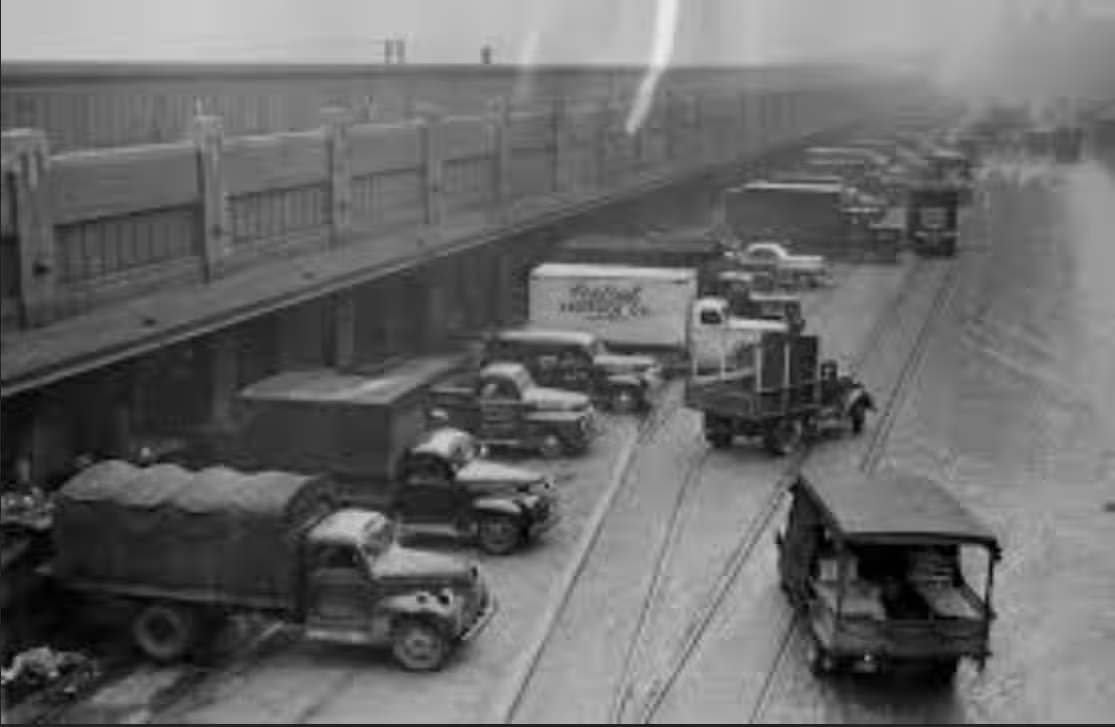
Public market interior
Date: Early–mid 20th c. context · Location: Regional (Cleveland food system) · Subject: Produce trade
Urban halls received truck crops and specialty goods from valley and plateau farms.
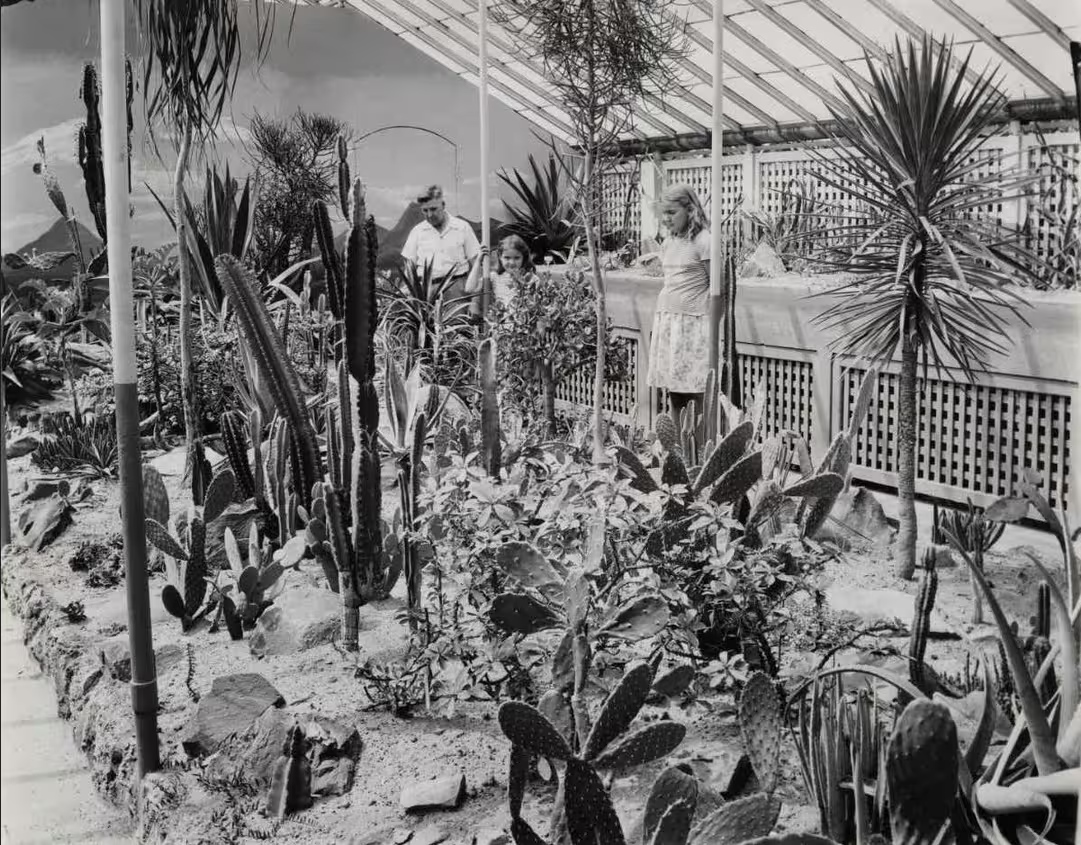
Greenhouse agriculture
Date: 20th c. horticulture · Location: Regional industry · Subject: Protected cultivation
Connects to narratives of specialty crops, labor migration, and peri-urban food systems referenced in the timeline.
Welton Farm and measured production in an agricultural census context
Welton Farm and measured production in an agricultural census context (1841 settlement; 1850 census output)
NPS gives a tightly dated microhistory: Allen Welton settled on 125 acres in Peninsula in 1841, expanded holdings, owned ~40 cows, and records from the 1850 agriculture census list 500 pounds of butter and 600 pounds of cheese. Significance: connects household-scale farming, land improvement, and dairy-processing entrepreneurship to documented outputs.
NPS gives a tightly dated microhistory: Allen Welton settled on 125 acres in Peninsula in 1841, expanded holdings, owned ~40 cows, and records from the 1850 agriculture census list 500 pounds of butter and 600 pounds of cheese.
1841 agricultural society; fairs as technology-transfer venues
Institutionalization of “better farming” culture
Institutionalization of “better farming” culture (1841 agricultural society; fairs as technology-transfer venues)
A state heritage agriculture context reports the founding of the county agricultural society in 1841 and frames county fairs as mechanisms to showcase produce/livestock, spread new technology, and introduce markets; this is agricultural anthropology in institutional form—organized learning, competition, and community identity around production.
Heritage Farms as a documented mid-nineteenth-century farm landscape
Heritage Farms as a documented mid-nineteenth-century farm landscape (1844–1878 purchase; 1846 barn)
NPS describes Heritage Farms as the oldest family-run farm in Peninsula and notes a barn in continuous use since 1846; oral history framing emphasizes diversified outputs (grains, livestock) and adaptive product shifts by generation. Significance: illustrates “mixed farming” and long-term farmstead evolution under market pressures.
NPS describes Heritage Farms as the oldest family-run farm in Peninsula and notes a barn in continuous use since 1846; oral history framing emphasizes diversified outputs (grains, livestock) and adaptive product shifts by generation.
Rise of cheese factories and dairy specialization (late 1840s through early 1900s)
NPS states cheese factories began springing up along the canal by the late 1840s; it also reports that milk value nearly tripled between 1870 and 1910 and that local creameries processed surplus milk into cheese and butter. This matters because it shows how processing infrastructure (factories) restructured household labor (less home cheese-making) and enabled longer-distance commerce.
NPS states cheese factories began springing up along the canal by the late 1840s; it also reports that milk value nearly tripled between 1870 and 1910 and that local creameries processed surplus milk into cheese and butter.
Railroads and the valley’s industrial/agricultural linkage
Railroads and the valley’s industrial/agricultural linkage (rail in use by 1852; Valley Railway finished 1880)
NPS notes that the railroad was in use by 1852 for shipping and buying machinery and identifies the Valley Railway’s completion in 1880 as accelerating industrial expansion; analytically, rail reduced seasonality constraints that limited canals and intensified the integration of farm outputs with urban industrial centers.
Public market interior
Date: Early–mid 20th c. context · Location: Regional (Cleveland food system) · Subject: Produce trade
Urban halls received truck crops and specialty goods from valley and plateau farms.
Greenhouse agriculture
Date: 20th c. horticulture · Location: Regional industry · Subject: Protected cultivation
Connects to narratives of specialty crops, labor migration, and peri-urban food systems referenced in the timeline.
Women’s farm ownership and production documentation
Women’s farm ownership and production documentation (after 1861; specific owner example)
NPS notes research indicating at least one woman (Elizabeth Hynton) is listed as farm owner after 1861 and reports quantified outputs (eggs, butter) above average for the area, showing that gendered labor and ownership patterns were more varied than a simple “farm wife” model.
Public market interior
Date: Early–mid 20th c. context · Location: Regional (Cleveland food system) · Subject: Produce trade
Urban halls received truck crops and specialty goods from valley and plateau farms.
Greenhouse agriculture
Date: 20th c. horticulture · Location: Regional industry · Subject: Protected cultivation
Connects to narratives of specialty crops, labor migration, and peri-urban food systems referenced in the timeline.
Greenhouse/urban-edge horticulture and migrant labor
Greenhouse/urban-edge horticulture and migrant labor (late 1800s–early 1960s)
A Cleveland Historical synthesis reports that Cleveland’s greenhouse industry expanded to “400 acres under glass” and employed “1,000 hothouse farmers,” many Puerto Rican migrants, by the early 1960s—an agricultural anthropology marker tying crop specialization, labor migration, and peri-urban land use to the broader Cuyahoga region’s food system.
Public market interior
Date: Early–mid 20th c. context · Location: Regional (Cleveland food system) · Subject: Produce trade
Urban halls received truck crops and specialty goods from valley and plateau farms.
Greenhouse agriculture
Date: 20th c. horticulture · Location: Regional industry · Subject: Protected cultivation
Connects to narratives of specialty crops, labor migration, and peri-urban food systems referenced in the timeline.
Agricultural fairs as enduring cultural infrastructure
Agricultural fairs as enduring cultural infrastructure (since 1893; continuing)
Regional sources emphasize that the county fair tradition persisted even as agriculture waned, with the West Cuyahoga County Fair Society established in 1893; analytically, fairs function as “memory institutions” preserving agricultural identity amid urbanization.
Public market interior
Date: Early–mid 20th c. context · Location: Regional (Cleveland food system) · Subject: Produce trade
Urban halls received truck crops and specialty goods from valley and plateau farms.
Greenhouse agriculture
Date: 20th c. horticulture · Location: Regional industry · Subject: Protected cultivation
Connects to narratives of specialty crops, labor migration, and peri-urban food systems referenced in the timeline.
20th-Century Change, Decline, and Preservation Pressure
Industrial growth, mechanization, labor change, infrastructure upgrades, and altered land use transformed the valley’s farm economy. By the mid-twentieth century, agriculture remained present but increasingly fragile, setting the stage for stronger preservation pressure and a new public conversation about the future of farmland.
early 1900s
Industrial boom → truck farming and roadside-scale diversification
Industrial boom → truck farming and roadside-scale diversification (early 1900s)
NPS states that as Cleveland and Akron industrial jobs lured farmers away, agriculture in the valley became more focused on “truck farming” (diverse fruits/vegetables sold locally), an adaptive strategy that preserved household food security and generated cash through stands and markets.
Public market interior
Date: Early–mid 20th c. context · Location: Regional (Cleveland food system) · Subject: Produce trade
Urban halls received truck crops and specialty goods from valley and plateau farms.
Greenhouse agriculture
Date: 20th c. horticulture · Location: Regional industry · Subject: Protected cultivation
Connects to narratives of specialty crops, labor migration, and peri-urban food systems referenced in the timeline.
Communal labor traditions persisting into the mid-twentieth century
Communal labor traditions persisting into the mid-twentieth century (early 1900s; 1940s recollections)
NPS describes early twentieth-century wheat threshing as a communal labor pool moving field-to-field using a steam engine, with later recollections describing similar patterns into the 1940s; this matters because it documents a cooperative labor anthropology that coexisted with mechanization.
Public market interior
Date: Early–mid 20th c. context · Location: Regional (Cleveland food system) · Subject: Produce trade
Urban halls received truck crops and specialty goods from valley and plateau farms.
Greenhouse agriculture
Date: 20th c. horticulture · Location: Regional industry · Subject: Protected cultivation
Connects to narratives of specialty crops, labor migration, and peri-urban food systems referenced in the timeline.
Canal flooding and the symbolic end of an “agricultural era” in the county
Canal flooding and the symbolic end of an “agricultural era” in the county (1913)
A state heritage agriculture context reports a major 1913 canal flood that led to destruction of many locks/dams and states the canal was not rebuilt, framing this as marking the end of an agricultural era in Cuyahoga County and aligning with broader industrial boom pressures drawing labor away from farming.
Public market interior
Date: Early–mid 20th c. context · Location: Regional (Cleveland food system) · Subject: Produce trade
Urban halls received truck crops and specialty goods from valley and plateau farms.
Greenhouse agriculture
Date: 20th c. horticulture · Location: Regional industry · Subject: Protected cultivation
Connects to narratives of specialty crops, labor migration, and peri-urban food systems referenced in the timeline.
Szalay family sweet-corn continuity as a twentieth-century anchor
Szalay family sweet-corn continuity as a twentieth-century anchor (since 1931)
NPS documents continuous sweet-corn selling by the Szalay family since 1931 along Riverview Road in the Everett area, making it a rare continuity marker across depression-era, postwar, and late twentieth-century land-use change.
Public market interior
Date: Early–mid 20th c. context · Location: Regional (Cleveland food system) · Subject: Produce trade
Urban halls received truck crops and specialty goods from valley and plateau farms.
Greenhouse agriculture
Date: 20th c. horticulture · Location: Regional industry · Subject: Protected cultivation
Connects to narratives of specialty crops, labor migration, and peri-urban food systems referenced in the timeline.
c. 1939–1940 in Everett area; based on oral history memory
Electrification and water as food-system technology
Electrification and water as food-system technology (c. 1939–1940 in Everett area; based on oral history memory)
NPS records an oral-history recollection dating local electricity arrival to “’39 maybe ’40,” linking it to refrigerators, stoves, and running water—technologies that changed food storage, labor allocation, and farm household routines.
Public market interior
Date: Early–mid 20th c. context · Location: Regional (Cleveland food system) · Subject: Produce trade
Urban halls received truck crops and specialty goods from valley and plateau farms.
Greenhouse agriculture
Date: 20th c. horticulture · Location: Regional industry · Subject: Protected cultivation
Connects to narratives of specialty crops, labor migration, and peri-urban food systems referenced in the timeline.
Postwar mechanization and “weekend farming” (after 1945)
NPS reports that within two to three years after 1945, most valley farmers shifted from horses to tractors, compressing labor time and enabling part-time (“weekend”) farming alongside industrial employment—an important anthropological hybrid of wage labor + farm identity.
Public market interior
Date: Early–mid 20th c. context · Location: Regional (Cleveland food system) · Subject: Produce trade
Urban halls received truck crops and specialty goods from valley and plateau farms.
Greenhouse agriculture
Date: 20th c. horticulture · Location: Regional industry · Subject: Protected cultivation
Connects to narratives of specialty crops, labor migration, and peri-urban food systems referenced in the timeline.
Park Formation and the Reframing of Agricultural Land
With the creation of the national recreation area, agricultural land in the valley was reframed inside a new public landscape. Acquisition, stewardship, and preservation priorities changed the terms under which remaining farms could continue and prepared the ground for a different model of farm renewal.
December 1974; June 1975 establishment steps
Creation of the national recreation area framework
Creation of the national recreation area framework (December 1974; June 1975 establishment steps)
NPS states Congress created the park unit on December 27, 1974 (Public Law 93-555), and the park’s “key dates” chronology situates this in a decades-long coalition effort to preserve scenic and cultural resources in an urban-adjacent valley. Significance to agriculture: NPS later frames farming heritage as part of the resources Congress intended to protect, providing a statutory/policy rationale for later farmstead rehabilitation.
NPS states Congress created the park unit on December 27, 1974 (Public Law 93-555), and the park’s “key dates” chronology situates this in a decades-long coalition effort to preserve scenic and cultural resources in an urban-adjacent valley.
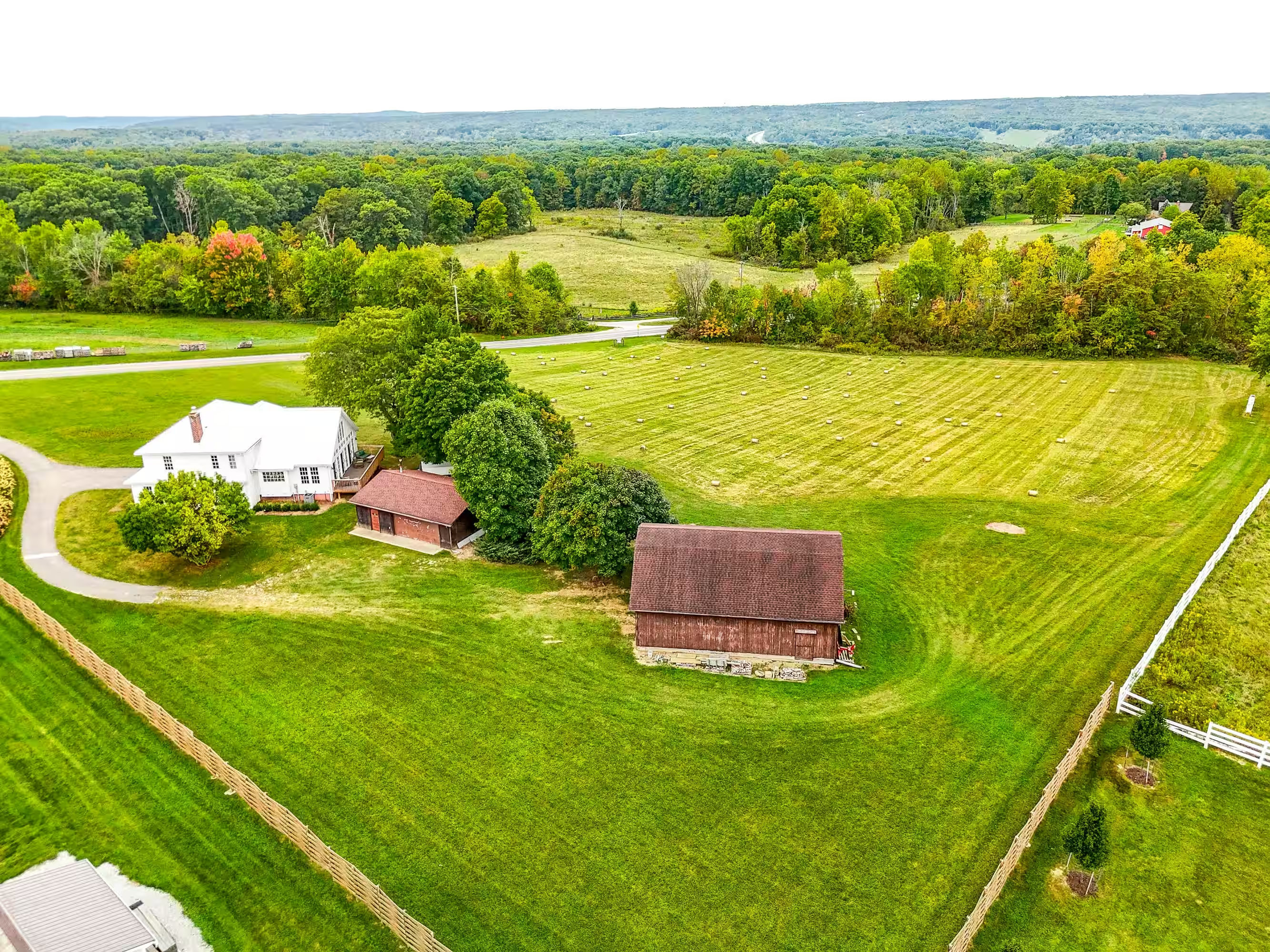
Agricultural patchwork from above
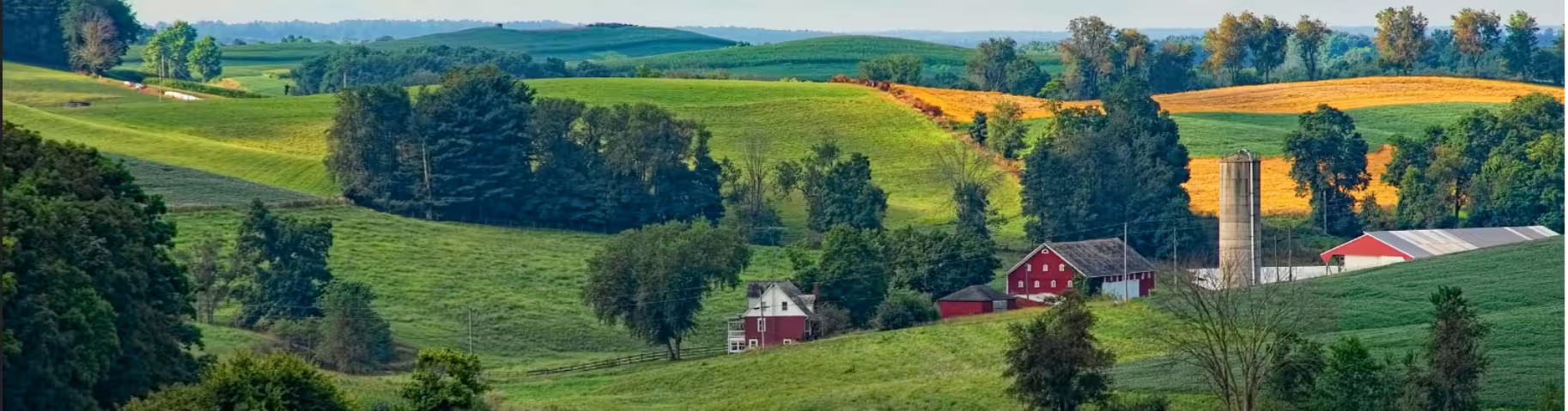
Date: Contemporary · Location: Cuyahoga Valley National Park · Subject: Stewardship footprint
Illustrates how leased farm parcels read against woodland and riparian zones in the park.
Vineyard rows
Date: Contemporary · Location: In-park farm site · Subject: Specialty crop production
Represents diversification of historic farmsteads under long-term agricultural management.
Spice Acres
Everett Road farmstead · Contemporary
Culinary-forward diversified farm; scene shows production ground in the Countryside program.
Land acquisition consequences for remaining farmers
Land acquisition consequences for remaining farmers (post-1974; timestamp range unspecified)
NPS reports that after establishment many remaining farmers sold property to the federal government—often unhappily—highlighting the social costs of preservation and the tension between continued farming and park-based land management.
Agricultural patchwork from above
Date: Contemporary · Location: Cuyahoga Valley National Park · Subject: Stewardship footprint
Illustrates how leased farm parcels read against woodland and riparian zones in the park.
Vineyard rows
Date: Contemporary · Location: In-park farm site · Subject: Specialty crop production
Represents diversification of historic farmsteads under long-term agricultural management.
Spice Acres
Everett Road farmstead · Contemporary
Culinary-forward diversified farm; scene shows production ground in the Countryside program.
The Countryside Initiative introduced a nonprofit-partnership and long-term lease model that paired farmstead rehabilitation with working agriculture, public markets, and food-access programs. In this first major phase, the lease-farm network took shape and the initiative’s first decade became visible in both farm launches and oral-history reflection.
1999; rehabilitating mid-1800s to mid-1900s farms
Countryside Initiative launch and goals
Countryside Initiative launch and goals (1999; rehabilitating mid-1800s to mid-1900s farms)
NPS states the farming program began in 1999 as the Countryside Initiative, intending to rehabilitate ~20 “picturesque old farms” that had operated from the mid-nineteenth to mid-twentieth centuries and had fallen into disrepair as agriculture disappeared in the 1900s. Significance: this is a deliberate “working landscape” preservation model (agriculture as conservation tool), rather than a static museum approach.
NPS states the farming program began in 1999 as the Countryside Initiative, intending to rehabilitate ~20 “picturesque old farms” that had operated from the mid-nineteenth to mid-twentieth centuries and had fallen into disrepair as agriculture disappeared in the 1900s.
Agricultural patchwork from above
Date: Contemporary · Location: Cuyahoga Valley National Park · Subject: Stewardship footprint
Illustrates how leased farm parcels read against woodland and riparian zones in the park.
Vineyard rows
Date: Contemporary · Location: In-park farm site · Subject: Specialty crop production
Represents diversification of historic farmsteads under long-term agricultural management.
Spice Acres
Everett Road farmstead · Contemporary
Culinary-forward diversified farm; scene shows production ground in the Countryside program.
Nonprofit partnership and long-term lease model (1999; pilot farms by 2002)
An NPS publication describes a nonprofit partner created in 1999 to provide sustainable agriculture expertise, with farmers selected through a competitive RFP process and granted long-term leases; it also states the first pilot farms were established in 2002 and describes a vision for over 20 farms using ~1,350 acres (~5% of park lands).
Agricultural patchwork from above
Date: Contemporary · Location: Cuyahoga Valley National Park · Subject: Stewardship footprint
Illustrates how leased farm parcels read against woodland and riparian zones in the park.
Vineyard rows
Date: Contemporary · Location: In-park farm site · Subject: Specialty crop production
Represents diversification of historic farmsteads under long-term agricultural management.
Spice Acres
Everett Road farmstead · Contemporary
Culinary-forward diversified farm; scene shows production ground in the Countryside program.
Continuity and governance narrative (1999 → present; market nonprofit shift in 2022)
The Cuyahoga Valley Countryside Conservancy’s history page presents a concise internal timeline: Countryside Initiative launched 1999; first market began 2004, moved 2009, expanded winter offerings in 2010; and the market became its own nonprofit organization in 2022. Treat this as a partner narrative that is best verified against NPS/Conservancy pages for specific claims.
The Cuyahoga Valley Countryside Conservancy’s history page presents a concise internal timeline: Countryside Initiative launched 1999; first market began 2004, moved 2009, expanded winter offerings in 2010; and the market became its own nonprofit organization in 2022.
Agricultural patchwork from above
Date: Contemporary · Location: Cuyahoga Valley National Park · Subject: Stewardship footprint
Illustrates how leased farm parcels read against woodland and riparian zones in the park.
Vineyard rows
Date: Contemporary · Location: In-park farm site · Subject: Specialty crop production
Represents diversification of historic farmsteads under long-term agricultural management.
Spice Acres
Everett Road farmstead · Contemporary
Culinary-forward diversified farm; scene shows production ground in the Countryside program.
Countryside lease RFPs and consumer-facing market creation
Countryside lease RFPs and consumer-facing market creation (2001–2004)
The Conservancy for CVNP summarizes that the first RFPs for Countryside farm leases were distributed in 2001 and that the first Countryside Farmers’ Market opened in 2004 at Heritage Tree Farm, enabling direct consumer access to park-linked farms and regional producers. Significance: the market operationalized “preservation through commerce,” creating a revenue interface for small farms and a public-facing education space.
The Conservancy for CVNP summarizes that the first RFPs for Countryside farm leases were distributed in 2001 and that the first Countryside Farmers’ Market opened in 2004 at Heritage Tree Farm, enabling direct consumer access to park-linked farms and regional producers.
Agricultural patchwork from above
Date: Contemporary · Location: Cuyahoga Valley National Park · Subject: Stewardship footprint
Illustrates how leased farm parcels read against woodland and riparian zones in the park.
Vineyard rows
Date: Contemporary · Location: In-park farm site · Subject: Specialty crop production
Represents diversification of historic farmsteads under long-term agricultural management.
Spice Acres
Everett Road farmstead · Contemporary
Culinary-forward diversified farm; scene shows production ground in the Countryside program.
In spring 2008, the NPS key-dates chronology says Cuyahoga Valley Countryside Conservancy changed its public name to Countryside Conservancy in order to better communicate its mission of reconnecting land, farming, food, and community; later, that branding was shortened further to Countryside. This makes 2008 the clearest dated rebranding milestone in the program’s nonprofit partner history.
Major public-branding milestone for the nonprofit partner.
Agricultural patchwork from above
Date: Contemporary · Location: Cuyahoga Valley National Park · Subject: Stewardship footprint
Illustrates how leased farm parcels read against woodland and riparian zones in the park.
Vineyard rows
Date: Contemporary · Location: In-park farm site · Subject: Specialty crop production
Represents diversification of historic farmsteads under long-term agricultural management.
Market relocation and food-access programming (2009)
The Conservancy for CVNP reports the market moved to Howe Meadow in 2009 and that Countryside launched food-access programming the same year (SNAP acceptance and Produce Perks matching, plus WIC and senior vouchers), reframing local-food markets as both economic development and equity infrastructure.
Agricultural patchwork from above
Date: Contemporary · Location: Cuyahoga Valley National Park · Subject: Stewardship footprint
Illustrates how leased farm parcels read against woodland and riparian zones in the park.
Vineyard rows
Date: Contemporary · Location: In-park farm site · Subject: Specialty crop production
Represents diversification of historic farmsteads under long-term agricultural management.
Spice Acres
Everett Road farmstead · Contemporary
Culinary-forward diversified farm; scene shows production ground in the Countryside program.
Oral history: Alan Halko on farming in a national park
Oral history: Alan Halko on farming in a national park (2011 oral history project)
Alan Halko, identified by the park as the first farmer awarded a Countryside Initiative farm in 2001, recalls that operating on National Park Service land meant dealing with archaeological review before setting fence posts and uncovering buried concrete from former greenhouse structures. The clip captures the on-the-ground friction of making a restored farmstead workable while still meeting preservation requirements.
Alan Halko describes the practical difficulties of running Spring Hill Farm and Market on park land, including archaeological clearance, buried greenhouse concrete, and infrastructure delays.
Oral history: Daniel Greenfield on sustainability and the small farm
Oral history: Daniel Greenfield on sustainability and the small farm (2011 oral history project)
Daniel Greenfield frames sustainability as more than environmentally sound practice: farmers submit annual proposals to the National Park Service, but they also have to answer whether a small farm can survive economically. He argues that the valley’s strength lies in its location—inside a national park and between Cleveland and Akron—making destination farming and direct access to customers central to long-term viability.
Daniel Greenfield explains that sustainability in the park means both ecological practice and the unresolved economic challenge of keeping a small farm viable.
Oral history: Daniel Greenfield on life outdoors (2011 oral history project)
In this clip Daniel Greenfield describes the personal draw of farm work: long labor, limited financial payoff, and a durable attachment to land and outdoor work. The page pairs the interview with broader interpretation about how valley farmers made a living, linking first-person motivation to the larger economic history of agriculture in the Cuyahoga Valley.
Daniel Greenfield describes farming as hard work with limited monetary payback but strong non-monetary rewards rooted in land, nature, and daily problem-solving.
Oral history: Darwin Kelsey on the Countryside Initiative
Oral history: Darwin Kelsey on the Countryside Initiative (2011 oral history project)
Darwin Kelsey, identified by the park as founder of Countryside Conservancy and at the time its executive director, explains that the project began by inventorying roughly eighty-five deteriorated farm remnants and revising expectations downward as rehabilitation realities became clear. His oral history links Native American agriculture, nineteenth-century farm growth, twentieth-century decline, and the park-era decision to treat farm rehabilitation as a response to cultural disappearance.
Darwin Kelsey summarizes the logic of the Countryside Initiative: inventorying surviving farm fragments, estimating what could be restored, and rebuilding a living agricultural landscape rather than letting it disappear.
Oral history: Beth Knorr on sustainable farming visibility
Oral history: Beth Knorr on sustainable farming visibility (2011 oral history project)
Beth Knorr, identified by the park as Countryside Conservancy’s local food programs coordinator and market manager, emphasizes that the national park gives sustainable agriculture a “bully pulpit.” Her clip ties proximity, public access, and educational value together: because the farms sit between two large metro populations, the park can challenge the assumption that farming must be ecologically destructive.
Beth Knorr argues that a national park functions as a highly visible platform for sustainable agriculture, making it easier for nearby metropolitan publics to see farming that is not environmentally destructive.
Oral history: Earl Foote on loving farm life (2011 oral history project)
Earl Foote’s short clip is one of the clearest statements of personal attachment to farm labor in the park’s oral history collection. The interview roster says Earle Foote discussed operations on a Valley View family farm held since the 1890s; the oral-history excerpt distills that continuity into the pleasures of daily work and watching crops grow.
Earl Foote reduces the motive for farming to direct satisfaction in field work, long days on the tractor, and watching crops emerge.
The NPS key-dates chronology records May 1, 2002 as the first day two farms were leased through the Countryside Initiative. Mike and Margaret Lytz opened Sarah’s Vineyard on the Parry property, while Robert and Joan Hall opened Blue Hen Family Farm on the Leyser property, making this the first dated lease milestone in the park’s revived farm program.
First dated lease milestone in the Countryside farming program.
Agricultural patchwork from above
Date: Contemporary · Location: Cuyahoga Valley National Park · Subject: Stewardship footprint
Illustrates how leased farm parcels read against woodland and riparian zones in the park.
Vineyard rows
Date: Contemporary · Location: In-park farm site · Subject: Specialty crop production
Represents diversification of historic farmsteads under long-term agricultural management.
Sarah’s Vineyard
Grapes & wine · Contemporary
Slope planting visible; ties to specialty crop history in the region.
On July 1, 2002, Alan and Susan Halko established Spring Hill Farm and Market on the Vaughn farm property. The NPS key-dates page notes that this lease line eventually became Spice Acres in 2014, so it forms an early bridge between the program’s first leasing era and one of its best-known later farm enterprises.
Early Vaughn-property lease that later transitions into Spice Acres.
Agricultural patchwork from above
Date: Contemporary · Location: Cuyahoga Valley National Park · Subject: Stewardship footprint
Illustrates how leased farm parcels read against woodland and riparian zones in the park.
Vineyard rows
Date: Contemporary · Location: In-park farm site · Subject: Specialty crop production
Represents diversification of historic farmsteads under long-term agricultural management.
Spice Acres
Everett Road farmstead · Contemporary
Culinary-forward diversified farm; scene shows production ground in the Countryside program.
The NPS key-dates chronology records May 8, 2006 as the start date for Daniel and Michelle Greenfield’s Greenfield Berry Farm on the Alan Welton property. That date anchors one of the park program’s longest-running berry enterprises and aligns with later case-study and oral-history material about leasing, sustainable farming, and public farm access.
Lease start for one of the program’s best-documented farms.
Agricultural patchwork from above
Date: Contemporary · Location: Cuyahoga Valley National Park · Subject: Stewardship footprint
Illustrates how leased farm parcels read against woodland and riparian zones in the park.
Vineyard rows
Date: Contemporary · Location: In-park farm site · Subject: Specialty crop production
Represents diversification of historic farmsteads under long-term agricultural management.
Greenfield Berry Farm
Certified organic brambles · Contemporary
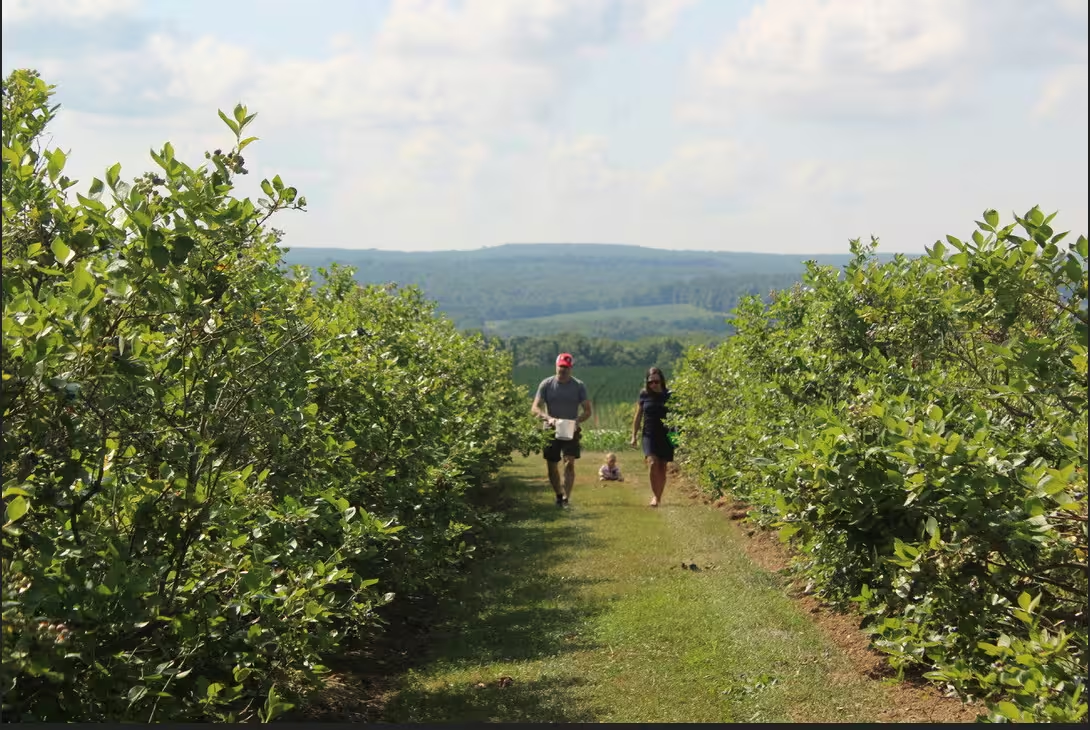
U-pick and market fruit; hedgerows visible along some ridgelines.
The NPS key-dates chronology records July 12, 2007 as the launch of an Akron summer market at Stan Hywet Hall & Gardens. This widened Countryside’s market geography beyond Peninsula and showed that the program’s local-food model could serve both park visitors and urban consumers.
Expansion of the market program beyond the park core.
Agricultural patchwork from above
Date: Contemporary · Location: Cuyahoga Valley National Park · Subject: Stewardship footprint
Illustrates how leased farm parcels read against woodland and riparian zones in the park.
Vineyard rows
Date: Contemporary · Location: In-park farm site · Subject: Specialty crop production
Represents diversification of historic farmsteads under long-term agricultural management.
According to the NPS key-dates chronology, the Countryside Farmers’ Market at Heritage Farms hosted its first tomato tasting on August 18, 2007. The page notes that this annual tradition continued after the market later moved to Howe Meadow, making it a recurring agricultural-program marker rather than a one-off special event.
Start of a recurring market tradition centered on seasonal produce.
Agricultural patchwork from above
Date: Contemporary · Location: Cuyahoga Valley National Park · Subject: Stewardship footprint
Illustrates how leased farm parcels read against woodland and riparian zones in the park.
Vineyard rows
Date: Contemporary · Location: In-park farm site · Subject: Specialty crop production
Represents diversification of historic farmsteads under long-term agricultural management.
The NPS key-dates page records October 31, 2007 as the beginning of The Spicy Lamb Farm on the Ross-Garvey property. It later became one of the program’s recognizable livestock-oriented sites and helped represent the diversity of enterprises that Countryside brought back onto restored farmsteads.
Lease start for a pasture- and livestock-oriented farm site.
Agricultural patchwork from above
Date: Contemporary · Location: Cuyahoga Valley National Park · Subject: Stewardship footprint
Illustrates how leased farm parcels read against woodland and riparian zones in the park.
Vineyard rows
Date: Contemporary · Location: In-park farm site · Subject: Specialty crop production
Represents diversification of historic farmsteads under long-term agricultural management.
The Spicy Lamb Farm
Heritage sheep & orchard · Contemporary
Pasture-based livestock and fruit; public programs by appointment and event.
On November 16, 2007, the Neitenbach family began Neitenbach Farm on the Grether property. The NPS key-dates chronology describes it as specializing in culinary and medicinal herbs, highlighting how specialty crops became part of the program’s diversified agricultural mix.
Specialty-herb farm start within the Countryside program.
Agricultural patchwork from above
Date: Contemporary · Location: Cuyahoga Valley National Park · Subject: Stewardship footprint
Illustrates how leased farm parcels read against woodland and riparian zones in the park.
Vineyard rows
Date: Contemporary · Location: In-park farm site · Subject: Specialty crop production
Represents diversification of historic farmsteads under long-term agricultural management.
Neitenbach Farm
Placeholder scene graphic · See profile
Registry entry; photograph pending in this demo set.
The NPS key-dates chronology records November 15, 2008 as the first of three holiday farmers markets held at Happy Days Lodge. This marks the start of a winter-season market format that later shifted locations and ultimately helped establish the market’s year-round pattern.
First dated holiday/winter market milestone.
Agricultural patchwork from above
Date: Contemporary · Location: Cuyahoga Valley National Park · Subject: Stewardship footprint
Illustrates how leased farm parcels read against woodland and riparian zones in the park.
Vineyard rows
Date: Contemporary · Location: In-park farm site · Subject: Specialty crop production
Represents diversification of historic farmsteads under long-term agricultural management.
According to the NPS key-dates chronology, the winter Countryside Farmers’ Market moved from Happy Days Lodge to Old Trail School on November 20, 2010. The same chronology notes that the winter market became a weekly market in 2023, making this move a foundational step in the later year-round market structure.
Key relocation in the development of the winter market.
Agricultural patchwork from above
Date: Contemporary · Location: Cuyahoga Valley National Park · Subject: Stewardship footprint
Illustrates how leased farm parcels read against woodland and riparian zones in the park.
Vineyard rows
Date: Contemporary · Location: In-park farm site · Subject: Specialty crop production
Represents diversification of historic farmsteads under long-term agricultural management.
The NPS key-dates chronology records a December 1, 2011 partnership with Wholesome Wave to provide Countryside Carrot Cash for families using SNAP, matching fruit-and-vegetable purchases up to $20. This is one of the clearest dated milestones showing Countryside’s shift from farm rehabilitation alone toward food-access infrastructure.
Dated launch point for a signature food-access program.
Agricultural patchwork from above
Date: Contemporary · Location: Cuyahoga Valley National Park · Subject: Stewardship footprint
Illustrates how leased farm parcels read against woodland and riparian zones in the park.
Vineyard rows
Date: Contemporary · Location: In-park farm site · Subject: Specialty crop production
Represents diversification of historic farmsteads under long-term agricultural management.
Recent Reorganization and Current Countryside Landscape
Recent years show a reorganized Countryside landscape: market governance changes, revised food-access programming, and a current snapshot of farms and public-facing activity. The period reads as both continuity and transition, with the legacy system still visible while institutional structures evolve.
November 2022
Cuyahoga Valley Farmers Market becomes its own organization
Cuyahoga Valley Farmers Market becomes its own organization
Both the NPS key-dates chronology and the organizational material summarized in the attached notes identify November 2022 as the point when the market changed its name and became its own organization. This is the clearest dated governance split between the Countryside conservancy and the independent Cuyahoga Valley Farmers Market.
Formal organizational split between Countryside and the independent market nonprofit.
Agricultural patchwork from above
Date: Contemporary · Location: Cuyahoga Valley National Park · Subject: Stewardship footprint
Illustrates how leased farm parcels read against woodland and riparian zones in the park.
Vineyard rows
Date: Contemporary · Location: In-park farm site · Subject: Specialty crop production
Represents diversification of historic farmsteads under long-term agricultural management.
Winter market becomes weekly and Countryside tokens end
Winter market becomes weekly and Countryside tokens end
Two later market-era changes are tied to 2023 in official and market-maintained sources: the NPS key-dates chronology says the Old Trail School winter market became weekly in 2023, and the current CVFM summer-market page says old Countryside tokens were discontinued in 2023. Together these details mark the consolidation of the post-split market system under CVFM.
Post-split operating changes in the independent market era.
Agricultural patchwork from above
Date: Contemporary · Location: Cuyahoga Valley National Park · Subject: Stewardship footprint
Illustrates how leased farm parcels read against woodland and riparian zones in the park.
Vineyard rows
Date: Contemporary · Location: In-park farm site · Subject: Specialty crop production
Represents diversification of historic farmsteads under long-term agricultural management.
Current operational footprint and public-facing farm activity
Current operational footprint and public-facing farm activity
The most recently updated NPS Farms page states that nine farms currently operate on land leased from the park. An older NPS Countryside history page still describes eight operational farms and over a dozen restored properties, so this entry prioritizes the newer farm-program page while preserving the earlier program-history source for context.
Latest NPS farm-program overview and current active-farm count.
Agricultural patchwork from above
Date: Contemporary · Location: Cuyahoga Valley National Park · Subject: Stewardship footprint
Illustrates how leased farm parcels read against woodland and riparian zones in the park.
Vineyard rows
Date: Contemporary · Location: In-park farm site · Subject: Specialty crop production
Represents diversification of historic farmsteads under long-term agricultural management.
Spice Acres
Everett Road farmstead · Contemporary
Culinary-forward diversified farm; scene shows production ground in the Countryside program.
Present-day year-round farmers market scheduling (current schedule shown without a year label)
Cuyahoga Valley Farmers Market now operates as an independent year-round Saturday market. Its official pages describe the summer outdoor market at Howe Meadow (May through October) and the winter indoor market at Old Trail School (November through April), both typically running 9 a.m. to noon. The vendor-resources page ties this to first-week-of-May through end-of-October and first-Saturday-of-November through end-of-April seasonal operations.
Current recurring market schedule for the independent year-round farmers market.
Agricultural patchwork from above
Date: Contemporary · Location: Cuyahoga Valley National Park · Subject: Stewardship footprint
Illustrates how leased farm parcels read against woodland and riparian zones in the park.
Vineyard rows
Date: Contemporary · Location: In-park farm site · Subject: Specialty crop production
Represents diversification of historic farmsteads under long-term agricultural management.
Spice Acres
Everett Road farmstead · Contemporary
Culinary-forward diversified farm; scene shows production ground in the Countryside program.
By the 2010s, Countryside had moved into a more established phase marked by additional farm launches, education initiatives, and a broader organizational footprint. The work became less about proving the model and more about extending, supporting, and sustaining it across the valley.
2018
New Farmer Academy is launched
New Farmer Academy is launched
The Conservancy for CVNP’s Countryside history article says Countryside launched its New Farmer Academy in 2018 as a multi-year program creating paid career pathways through classroom instruction, technical training, business planning, and mentorship with beginning farmers. This is a major dated education milestone that broadens the timeline from land rehabilitation and markets into farmer development.
Major training-program milestone in the later Countryside era.
Agricultural patchwork from above
Date: Contemporary · Location: Cuyahoga Valley National Park · Subject: Stewardship footprint
Illustrates how leased farm parcels read against woodland and riparian zones in the park.
Vineyard rows
Date: Contemporary · Location: In-park farm site · Subject: Specialty crop production
Represents diversification of historic farmsteads under long-term agricultural management.
The NPS key-dates chronology records May 1, 2012 as the establishment date for Trapp Family Farm on the former Holland property. This marks the start of one of the program’s better-known mixed crop and livestock operations and gives the farm a precise place within the later Countryside timeline.
Launch of a current mixed-farm lease site.
Agricultural patchwork from above
Date: Contemporary · Location: Cuyahoga Valley National Park · Subject: Stewardship footprint
Illustrates how leased farm parcels read against woodland and riparian zones in the park.
Vineyard rows
Date: Contemporary · Location: In-park farm site · Subject: Specialty crop production
Represents diversification of historic farmsteads under long-term agricultural management.
Trapp Family Farm
Mixed crop & livestock · Draft power · Contemporary
Illustrates larger field blocks under animal traction management.
The NPS key-dates chronology records June 27, 2014 as the date Ben and Jackie Bebenroth began Spice Acres on the Vaughn farm property. Because the same NPS chronology also traces an earlier 2002 Spring Hill Farm and Market on that property, this date anchors the transition to the current culinary-forward Spice Acres era.
Launch of the current Spice Acres phase on the Vaughn property.
Agricultural patchwork from above
Date: Contemporary · Location: Cuyahoga Valley National Park · Subject: Stewardship footprint
Illustrates how leased farm parcels read against woodland and riparian zones in the park.
Vineyard rows
Date: Contemporary · Location: In-park farm site · Subject: Specialty crop production
Represents diversification of historic farmsteads under long-term agricultural management.
Spice Acres
Everett Road farmstead · Contemporary
Culinary-forward diversified farm; scene shows production ground in the Countryside program.
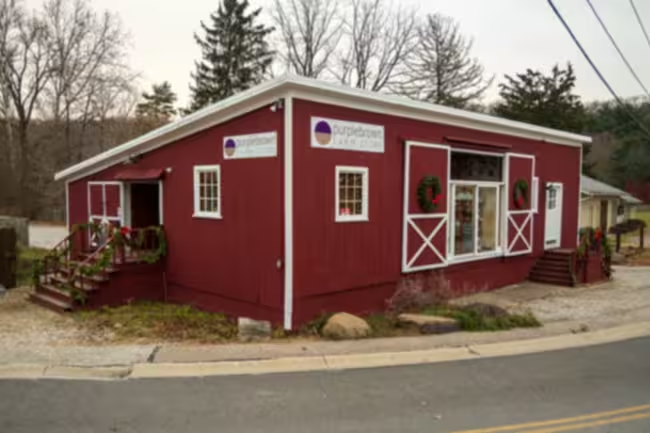
The NPS key-dates chronology records August 1, 2016 as the launch date for Purplebrown Farmstead on the Schmidt-Foster property. The same official chronology notes the later 2021 opening of the Purplebrown Farm Store in Peninsula, making this farm a clear example of Countryside enterprises extending into retail and public-facing food access.
Launch of Purplebrown Farmstead.
Agricultural patchwork from above
Date: Contemporary · Location: Cuyahoga Valley National Park · Subject: Stewardship footprint
Illustrates how leased farm parcels read against woodland and riparian zones in the park.
Vineyard rows
Date: Contemporary · Location: In-park farm site · Subject: Specialty crop production
Represents diversification of historic farmsteads under long-term agricultural management.
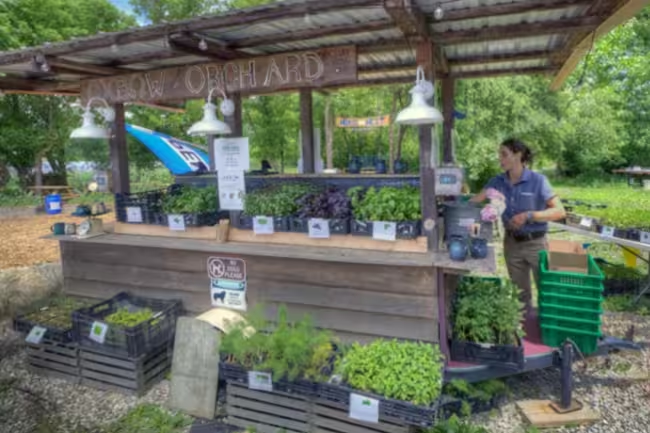
The NPS key-dates chronology records August 19, 2016 as the establishment date for Oxbow Orchard on the Edgar farm property. This provides a dated orchard milestone in the later program era and emphasizes the persistence of fruit production within the park’s farm portfolio.
Launch of Oxbow Orchard.
Agricultural patchwork from above
Date: Contemporary · Location: Cuyahoga Valley National Park · Subject: Stewardship footprint
Illustrates how leased farm parcels read against woodland and riparian zones in the park.
Vineyard rows
Date: Contemporary · Location: In-park farm site · Subject: Specialty crop production
Represents diversification of historic farmsteads under long-term agricultural management.
Oxbow Orchard
Tree fruit · Contemporary
Orchard scene in park context; see profile for varieties and visitation.
The NPS key-dates chronology records June 13, 2020 as the date Mike and Melissa Keleman began Keleman Point Farm on the Point-Biro farm property. This places one of the newest named current farms on the timeline and shows that the park program continued adding or reactivating farm operations well into the 2020s.
Start of one of the newest current farm leases.
Agricultural patchwork from above
Date: Contemporary · Location: Cuyahoga Valley National Park · Subject: Stewardship footprint
Illustrates how leased farm parcels read against woodland and riparian zones in the park.
Vineyard rows
Date: Contemporary · Location: In-park farm site · Subject: Specialty crop production
Represents diversification of historic farmsteads under long-term agricultural management.
Keleman Point Farm
In-park lease site · Contemporary
Scene documentation for registry; see profile for enterprises.
 Countryside Conservancy